25.03.2026
Practice Areas: Finance


European Union–Mercosur Agreement: framework, opportunities and legal implications
- Introduction
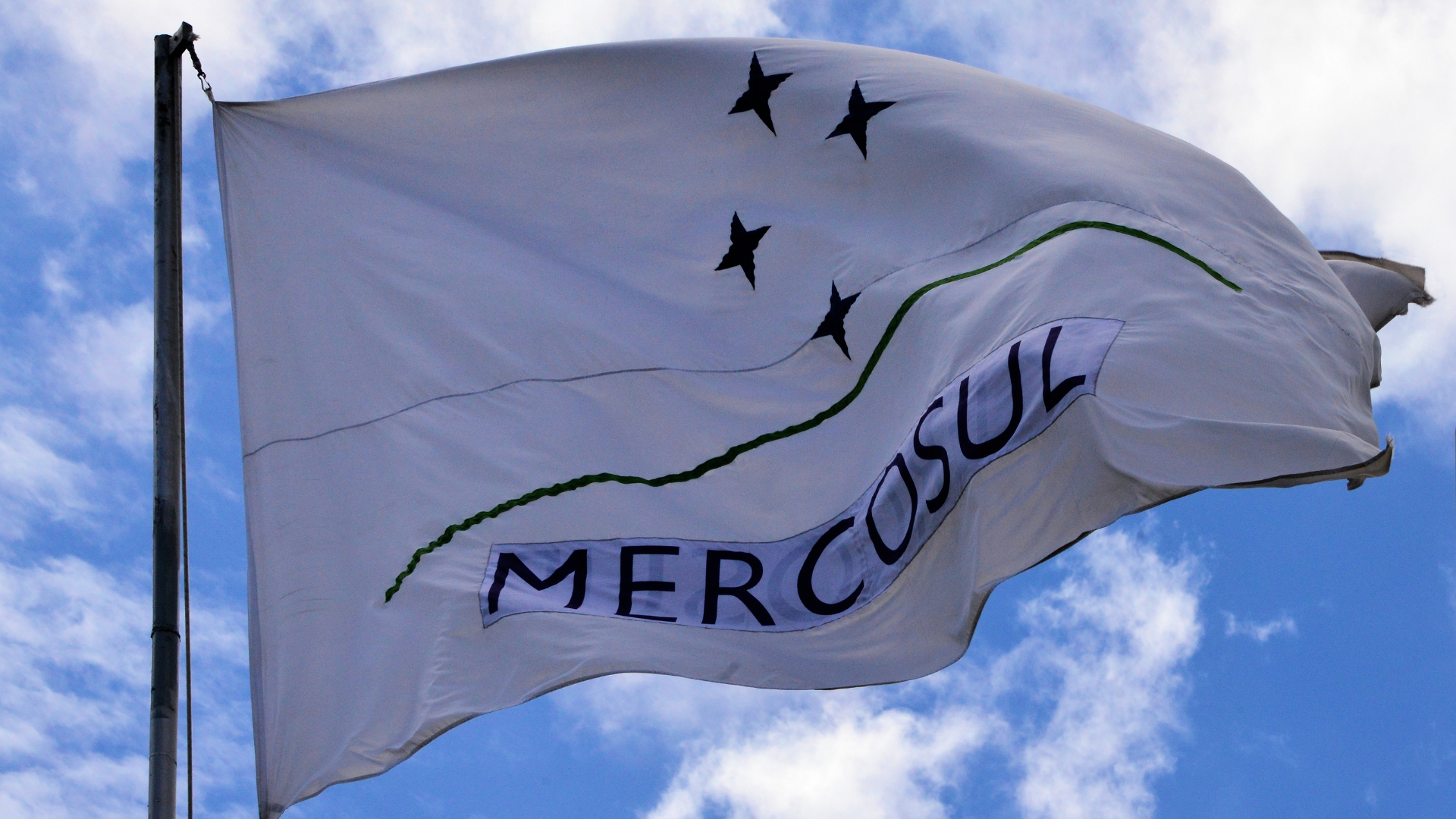
This informational note aims to present the current status of the Agreement between the European Union and Mercosur (which includes the Federative Republic of Brazil, the Argentine Republic, the Republic of Paraguay, and the Oriental Republic of Uruguay) the key opportunities for exporters and investors, and the legal aspects requiring immediate attention in light of the announced provisional application during the second quarter of 2026.
- What was signed and when does it enter into force?
The EU-Mercosur framework is now based on two legally distinct instruments, both signed at the beginning of 2026:
- The EU-Mercosur Partnership Agreement (“EMPA”), with pillars covering political dialogue, cooperation, and trade; and
- The Interim Trade Agreement (“iTA”), focused on trade and investment disciplines for application prior to the full entry into force of the EMPA.
Provisional application will begin with the iTA, allowing benefits in tariff and market access matters before the full ratification of the EMPA by Member States.
- Implementation and ratification
The ratification process for the agreement follows two distinct paths. The iTA covers matters within the exclusive competence of the EU (trade and investment), and requires only the approval of the Council of the EU and the consent of the European Parliament, without needing ratification by the national parliaments of Member States. On 9 January 2026, the Council authorised the signature of the iTA and its provisional application. However, the European Parliament has requested an opinion from the Court of Justice of the EU on the compatibility of the agreement with the Treaties, which could delay ratification by an estimated period of one to two years. Nevertheless, the European Commission may proceed with the provisional application of the agreement following ratification by Argentina and Uruguay. This provisional application allows the trade provisions to enter into force before the definitive consent of the European Parliament.
The EMPA, as it includes pillars of political dialogue and cooperation that extend beyond the exclusive competences of the EU, will need to be ratified by all Member States, a process that could easily take several years. On the Mercosur side, each country must also ratify the agreement in their respective national congresses. Argentina and Uruguay have already completed this process in February 2026, whilst Brazil and Paraguay are advancing with their internal procedures.
- Business Opportunities
Mercosur, comprising Argentina, Brazil, Paraguay, and Uruguay, represents a market of approximately 270 million consumers, and is today a key trading partner of the European Union. The iTA aims to progressively eliminate or reduce currently high tariffs on various industrial and agri-food goods, simplifying customs procedures, improving the recognition of technical standards, and opening up relevant segments of public procurement. For Portuguese companies, national public materials summarise the “new doors” of the agreement as follows: gradual tariff reductions, customs facilitation, clear rules of origin, commitments on services and establishment, and access to public procurement in various Mercosur States. The following gains are particularly noteworthy:
- Industrial goods (automotive and components, machinery, chemicals, and pharmaceuticals), through lower base tariffs and technical compliance costs;
- Agri-food and beverages, with reductions in currently significant duties and strengthening of geographical indications;
- Business, financial and digital services, via greater regulatory predictability and market access commitments;
- Public procurement (notably in Brazil, with a significant federal market), expanding the range of tenders in which European companies can compete on non-discriminatory terms.
Additionally, sectoral safeguard instruments and sustainable development provisions, as well as chapters on SMEs, state-owned enterprises, and transparency, seek to balance market opening with regulatory predictability.
- Bilateral Investment: Existing ties between Portugal and Mercosur
The EU is the largest foreign investor in Mercosur, with an investment stock of EUR 390 billion in 2023. Even before provisional application, the economic relationship had been intensifying, with significant Portuguese investments in Brazil and projects by national companies in other Mercosur States. Recent public examples include the awarding of infrastructure works in Brazil to Portuguese companies, and initiatives by Portuguese firms in the mobility, energy, and construction sectors. Conversely, AICEP reported that Brazilian investment in Portugal totaled approximately EUR 176 million between 2015 and 2021, with acceleration in more recent years, reflected in operations in the technology, tourism, and manufacturing sectors. These flows form the natural basis for acceleration under the iTA, particularly in transatlantic value chains.
- Sustainable Development and points of attention
The agreement incorporates the Paris Agreement as a fundamental element, allowing for partial or total suspension of the treaty in the event of serious non-compliance with or abandonment of that climate commitment. This stance reflects a commitment to implementing concrete and measurable measures to preserve ecosystem biodiversity and combat deforestation, as well as to strengthen workers’ rights and encourage responsible business practices.
The EU has created a EUR 6.3 billion safety net to protect European farmers in the event of market disruptions, with a specific safeguards regulation approved in February 2026, to allow for the temporary suspension of tariff preferences should there be a sudden increase in agricultural imports from Mercosur. Regarding food imports, only products that meet the EU’s rigorous food safety standards will be admitted, with the EU maintaining full control over strengthening the protection of the health and safety of European consumers.
Notwithstanding, environmental organisations and some Member States (notably France) have expressed concerns about the potential impact of the agreement on deforestation and unfair competition with European farmers.
- How may Abreu Advogados help?
Abreu Advogados has, for over two decades, supported commercial and investment operations between Portugal and Latin America, with dedicated practice areas in international trade, customs, public procurement, and corporate/M&A, together with a local network of partners. Based on accumulated experience with EU agreements under provisional application (e.g., contractual adaptation, procurement eligibility, regulatory and currency risk management), we are positioned to provide integrated advisory services on the following fronts:
- Customs and origin due diligence, value chain planning, and eligibility for tariff quotas;
- Contractual redesign (particularly regarding currency risk coverage given exchange rate volatility, safeguards, hardship, and compliance) and structuring of consortia for public procurement;
- Implementation of sustainable trade policies, traceability, and sector-specific regulatory compliance;
- Structuring and execution of direct investments, joint ventures, and industrial partnerships in Mercosur and Portugal, including analysis of incentives and liaison with authorities.
We combine sector-specific legal knowledge with transactional execution, offering bilingual teams and close coordination with local partners to reduce implementation friction “on the ground”.
We are at your disposal for any clarifications and additional information on these matters.